Every dealership wants to know which advertising sources are working. That question sounds simple, but the answer is often more complicated than most reports make it look.
A vendor may appear weak in the CRM. A campaign may appear expensive. A lead source may look like it is not producing enough activity. So the dealership cuts the budget, cancels the vendor, and moves money somewhere else.
Sometimes that decision is correct. But sometimes it is one of the most expensive marketing mistakes a dealership can make.
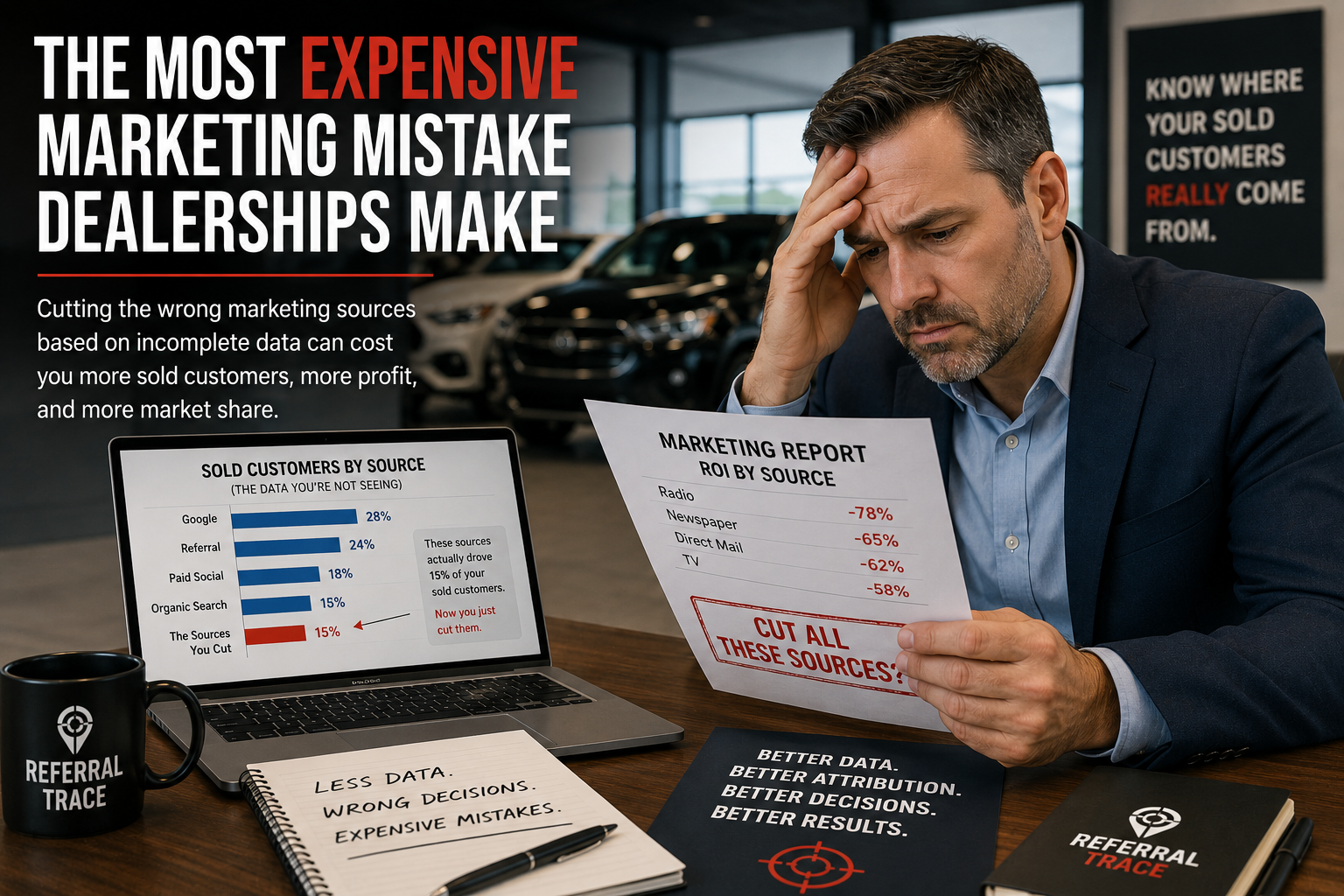
The mistake is not cutting a bad source. The mistake is cutting a source before knowing if it influenced sold customers.
Lead Reports Do Not Always Show Sales Influence
Many dealerships rely heavily on CRM lead reports when judging marketing performance. Those reports can be useful, but they often show where the customer entered the system, not every source that helped influence the sale.
A customer may discover a vehicle on a marketplace, return through Google, visit the dealership website, call the store, and then show up in the showroom. Depending on how the lead was captured, the CRM may only credit the final step.
That means a source can help create the sale without getting the credit it deserves.
This is why dealership marketing attribution software matters. It gives dealerships a better way to understand the customer journey instead of relying only on one source field.
The Most Dangerous Report Is the One That Looks Simple
Simple reports feel comfortable. They give management quick answers. Source A generated this many leads. Source B generated this many leads. Source C sold this many vehicles.
But car buyers do not move in simple lines. They compare vehicles, leave websites, return later, search again, ask friends, read reviews, watch videos, and interact with multiple advertising sources before buying.
When a report tries to reduce that entire journey to one source, important context can disappear.
Bad Attribution Can Make Good Vendors Look Bad
One of the most common dealership mistakes is canceling an advertising vendor because the CRM does not show enough direct leads or sales from that vendor.
The vendor may still be influencing real buyers. It may be helping shoppers discover inventory, compare pricing, build trust, or remember the dealership name before they convert somewhere else.
If the dealership only measures the final CRM source, the vendor may look like it failed even when it played an important role in sold customer activity.
A stronger automotive marketing attribution process helps reveal that hidden influence.
The Opposite Problem Can Also Happen
Poor attribution does not only make good sources look bad. It can also make average sources look stronger than they really are.
A source that captures the final click may receive credit for sales that were actually influenced by other campaigns. This can cause dealerships to overspend on the source that closed the loop while underfunding the source that created demand.
Over time, that creates a budget imbalance. The dealership keeps feeding the source that looks good on paper, while the real influence behind customer interest gets ignored.
Marketing Decisions Should Be Connected to Sold Customers
Dealerships do not need more confusing reports. They need better context connected to actual sales.
The real question is not only how many leads a campaign generated. The better question is how many sold customers were influenced by that campaign and what kind of gross profit those customers created.
That is where dealership ROI tracking becomes more useful. It connects marketing sources to sold customers, front gross, back gross, and total gross.
This turns advertising decisions into business decisions instead of guessing games.
Customer-Reported Attribution Fills the Missing Gap
The customer often remembers the source that mattered most. They may remember seeing the vehicle on Facebook, finding it on CarGurus, hearing about the dealership on the radio, receiving a mailer, or being referred by a friend.
That customer-reported information gives management another layer of truth. It does not replace the CRM. It helps complete the CRM picture.
This is why dealer source tracking should include both system-captured lead data and customer-reported influence.
The Real Cost of the Mistake
The cost of bad attribution is not just one canceled vendor. It can affect the entire marketing strategy.
A dealership may cut a source that was creating awareness, move money into a channel that only captures final traffic, and slowly weaken the advertising mix that was helping customers choose the store in the first place.
By the time management notices the difference, months of budget and opportunity may already be gone.
Better Attribution Leads to Better Confidence
Dealership leaders should not have to guess which advertising sources deserve more money and which sources need to be adjusted.
With stronger attribution, managers can see the difference between sources that create leads, sources that influence customers, and sources that connect to real sold deals.
That clarity helps dealerships cut smarter, invest smarter, and protect the advertising channels that are truly helping generate business.
The most expensive marketing mistake is not spending money on advertising. It is spending or cutting money without knowing the full customer story.
Stop making advertising decisions from incomplete reports.
ReferralTrace helps dealerships capture customer-reported source influence and connect marketing decisions to real sold customers.
Contact ReferralTrace