Every dealership wants to know which advertising source helped sell the vehicle. The problem is that most customer journeys are not simple enough to be explained by one lead source.
A shopper may see a Facebook ad, search the dealership on Google, visit the website, compare vehicles, ask a friend, call the store, and later walk into the showroom. By the time the sale happens, the CRM may only show the final step.
That final step matters, but it does not always tell the full story.
Understanding the customer journey matters because it helps dealerships enhance their marketing strategy instead of guessing where to spend next.
Customers Do Not Buy From One Touch
Most vehicle buyers interact with multiple marketing sources before they make a decision. They may notice a dealership through an awareness ad, come back through a search engine, browse inventory on the website, and later become a lead.
If the dealership only credits the final lead source, other important marketing channels can be ignored. That creates a blind spot in the dealership's advertising strategy.
This is why dealership marketing attribution software is important. It helps dealers understand more than where the lead entered. It helps reveal what influenced the customer before the sale.
Why Basic CRM Reports Can Be Misleading
CRM reports are useful, but they often focus on the source attached to the lead record. That source may not include every marketing channel that helped create awareness, interest, trust, and action.
A vendor may look weak because it did not create the final form submission. A campaign may look stronger than it really is because it captured the last click. A dealership may increase budget in one place while cutting another source that was quietly influencing sold customers.
When reporting is incomplete, marketing decisions become risky.
The Customer Journey You Never Saw
Imagine a customer who first sees a dealership ad while scrolling Facebook. A week later, that same customer searches Google for inventory. A few days after that, they hear a radio ad. Then a friend recommends the store. Later, the customer submits a lead and eventually buys.
In a simple report, the dealership may only see the lead source. But the full journey included awareness, search, referral influence, website activity, and a final sales opportunity.
A stronger automotive marketing attribution process helps dealers connect those pieces and understand how customers actually move toward a purchase.
Better Attribution Helps Protect Good Marketing
Without attribution, dealerships may cut vendors too early. A source may not appear to produce enough direct leads, but it may still be creating awareness and influencing future sold customers.
The same problem can happen in reverse. A source that receives the final click may appear to deserve more budget, even if other channels created the original customer interest.
Better attribution gives management more confidence. It helps dealers decide when to cut, when to adjust, and when to increase budget. Those decisions should be based on real sales influence, not assumptions.
Marketing Strategy Should Follow Sold Customers
The strongest advertising decisions are connected to sold customers, not just clicks or leads. Dealerships need to know which sources are tied to real buyers, real gross profit, and real market growth.
That is where dealership ROI tracking becomes powerful. It gives the store a better view of which marketing sources are helping create actual business.
Instead of asking only, “Which vendor generated the lead?” dealers can ask, “Which marketing sources influenced the sale?”
Discovering New Markets Around the Dealership
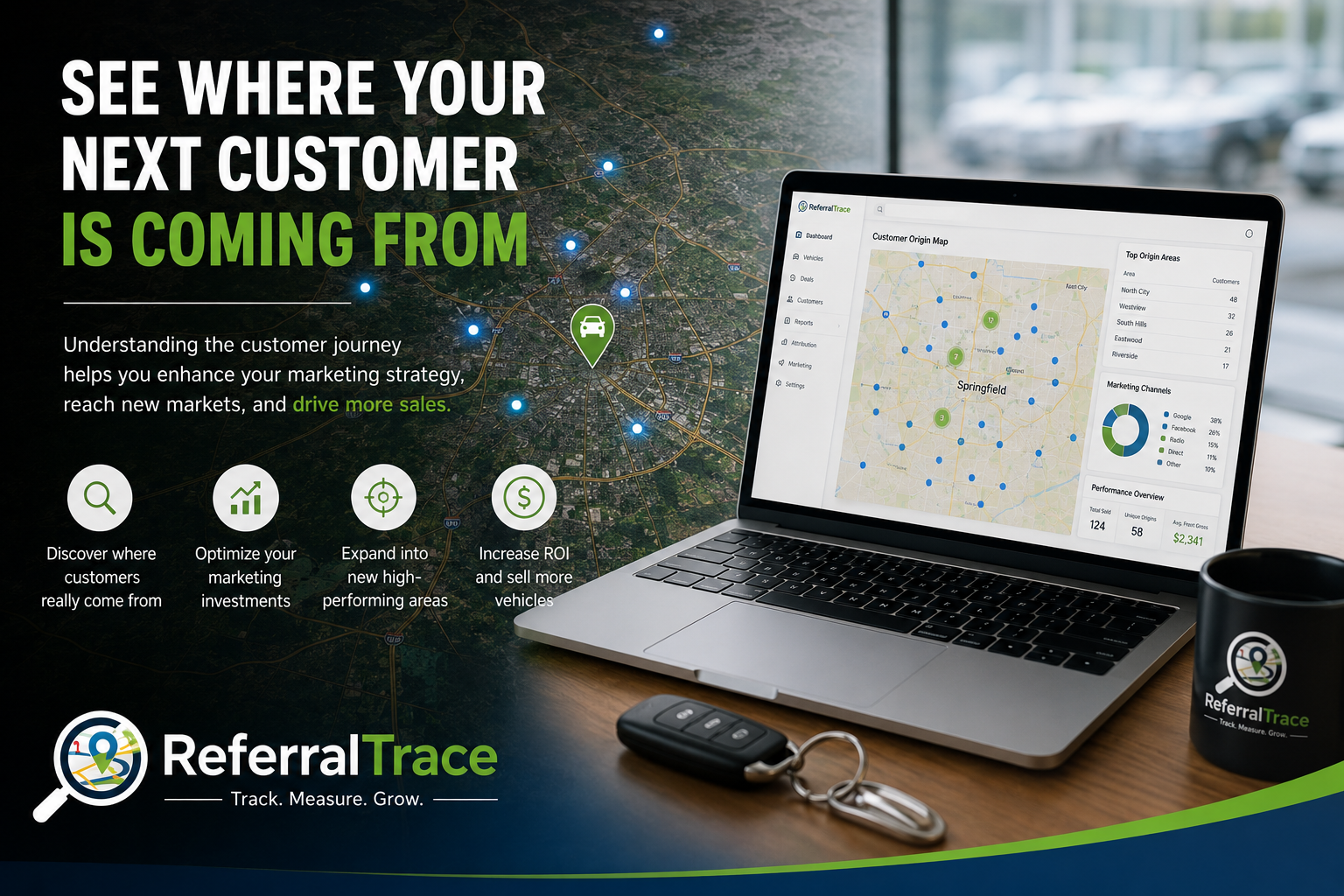
Attribution does more than help with vendor decisions. It can also show where customers are coming from geographically.
A dealership may think its market is limited to the same nearby towns. But sold customer data may reveal buyers coming from areas the store was not actively focused on. Those customer dots on the map can point to new opportunities.
If a dealership sees strong activity from another city, county, or trade area, management can increase advertising there with more confidence. That is how dealers can grow into areas they never had before.
ReferralTrace Turns Customer Source Data Into Strategy
ReferralTrace helps dealerships capture customer source information at the point of sale and connect it to sold customer activity, advertising influence, and dealership ROI.
This gives managers a clearer way to evaluate marketing. It helps them see which channels influence sales, which areas produce buyers, and where advertising budget may have the best chance to create more vehicle sales.
This is where dealer source tracking becomes more than reporting. It becomes a practical tool for building a better marketing strategy.
The Full Journey Creates the Full Strategy
Every vehicle sale has a story. Most dealerships only see the final chapter. Attribution helps uncover more of the journey so dealers can make smarter marketing decisions.
The goal is not simply to cut vendors or increase budget. The goal is to understand how customers move through the buying process, where real sales influence comes from, and how the dealership can use that knowledge to sell more vehicles.
When dealerships understand the customer journey, they can enhance their marketing strategy, protect the sources that matter, expand into stronger markets, and grow with more confidence.
See where your next customer is coming from.
ReferralTrace helps dealerships connect customer source data, sold customer activity, and marketing influence into smarter advertising decisions.
Contact ReferralTrace