Google Analytics is a useful tool for dealership marketing. It can show how many people visited the website, where they came from, which pages they viewed, what devices they used, and what actions happened online.
That information matters. But it does not answer the question Dealer Principals and General Managers care about most: which marketing sources actually helped sell cars?
A dealership can have clean analytics reports and still not know what influenced the customer who bought the vehicle.
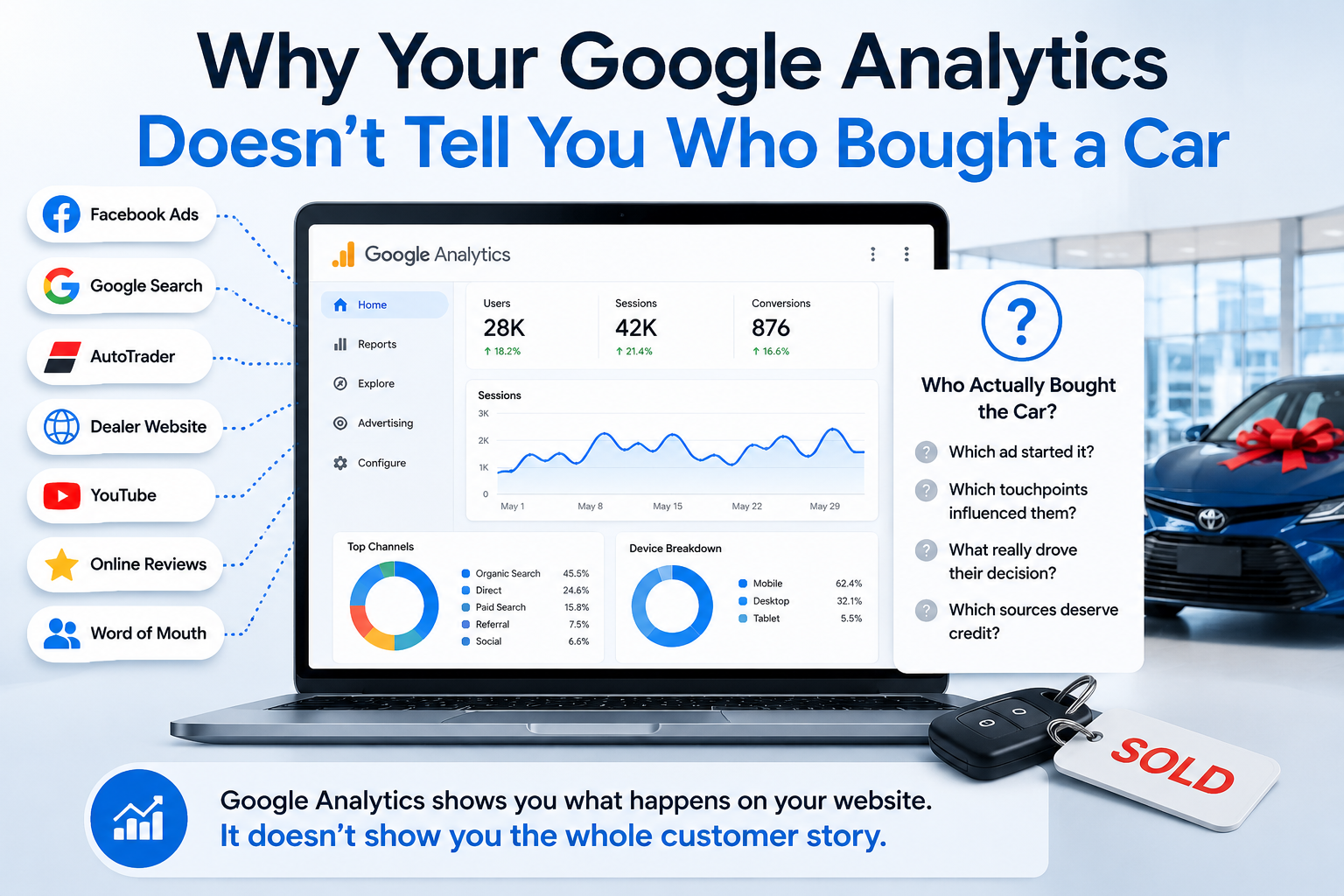
Google Analytics shows website activity. It does not confirm what influenced the sold customer.
Website Traffic Is Not the Same as Sold Customer Attribution
A customer may visit the dealership website three or four times before buying. Google Analytics may show the visits, the landing pages, the traffic source, and the time spent on the site.
But once that shopper leaves the website and calls the dealership, walks into the showroom, or returns days later from another device, the full picture becomes harder to see.
Google Analytics can tell you what happened on the website. It cannot automatically connect that activity to the final sold unit, gross profit, salesperson, ZIP code, trade, or CRM outcome.
The Customer Journey Does Not Stay Inside Analytics
Most vehicle shoppers do not follow a straight line. They may see a Facebook ad, search Google, read reviews, visit the dealership website, compare inventory on a marketplace, talk to a spouse, and then arrive at the store.
In the CRM, that customer may be marked as a phone up, internet lead, or walk-in. In Google Analytics, the customer may appear as separate website sessions. In reality, several sources may have influenced the same sale.
That is why dealership marketing attribution software needs to go beyond website traffic and lead-source labels.
Last Click Can Get Too Much Credit
One of the biggest problems is last-click thinking. If the final measurable action before the website visit came from Google, Google may appear to deserve the credit.
But what if the customer first saw the vehicle on Facebook? What if they remembered a radio spot? What if a marketplace listing created the interest, and Google only helped them find the store again?
The final click may be real, but it may not be the full influence.
Analytics Cannot Ask the Customer Why They Came In
Google Analytics cannot ask the buyer what made them choose the dealership. It cannot ask if they saw an ad last week, read reviews, watched a video, compared prices, or heard about the store from someone they trust.
That information usually lives with the customer. If the dealership does not ask, the answer may never make it into any report.
This is where dealer source tracking becomes important. The dealership needs a way to capture customer-reported influence and connect it to real sold customers.
Why It Matters for Marketing Budget Decisions
Dealer Principals and General Managers make expensive decisions from reports. They decide which vendors stay, which campaigns get cut, and which sources deserve more money.
If the dealership only reviews website sessions, form leads, or last-click activity, it may cut a source that quietly influenced buyers before the final action happened.
A source may not generate the final click but still create the interest. A campaign may not create the form lead but still create the showroom visit. A website visit may not convert online but still help the customer decide to trust the store.
Google Analytics Is Still Valuable
This does not mean Google Analytics is bad. It is still valuable for measuring website traffic, landing pages, campaigns, and online behavior.
The problem is expecting Google Analytics to answer a question it was not built to answer.
It can show what happened online. It cannot fully explain which advertising influence led to the sold customer after the journey moves offline.
The Missing Layer Is Customer-Reported Attribution
A stronger reporting process asks the customer what influenced them and connects that answer to the sale.
That means tying customer influence to sold units, front gross, back gross, total gross, ZIP code, vehicle type, and source performance.
That is the difference between simple website reporting and real dealership ROI tracking.
ReferralTrace Helps Complete the Picture
ReferralTrace does not replace Google Analytics. It completes the story that Google Analytics cannot finish by itself.
By capturing customer-reported influence and connecting it to sold customer results, ReferralTrace helps dealerships see which sources are truly influencing buyers.
Google Analytics can show the website activity. ReferralTrace helps connect the customer story to the sale.
For a dealership trying to protect its marketing budget, evaluate vendors, and understand what actually drives sold customers, that missing layer can make all the difference.
See the story behind the sold customer.
ReferralTrace helps dealerships capture customer-reported source influence and connect it to real sold customers.
Contact ReferralTrace