Many dealerships invest thousands of dollars every month into advertising. Digital campaigns, social media, third-party listing sites, radio, television, search engines, direct mail, and other marketing channels all compete for a share of the budget. Yet despite all that spending, many dealers still cannot answer one simple question.
Which advertising actually sold the vehicle?
Most reporting platforms focus on clicks, impressions, website traffic, phone calls, or form submissions. Those numbers matter, but they do not always tell the complete story. A customer may see a Facebook advertisement, visit the dealership website through Google, watch a video, and then walk into the showroom after hearing a radio commercial.
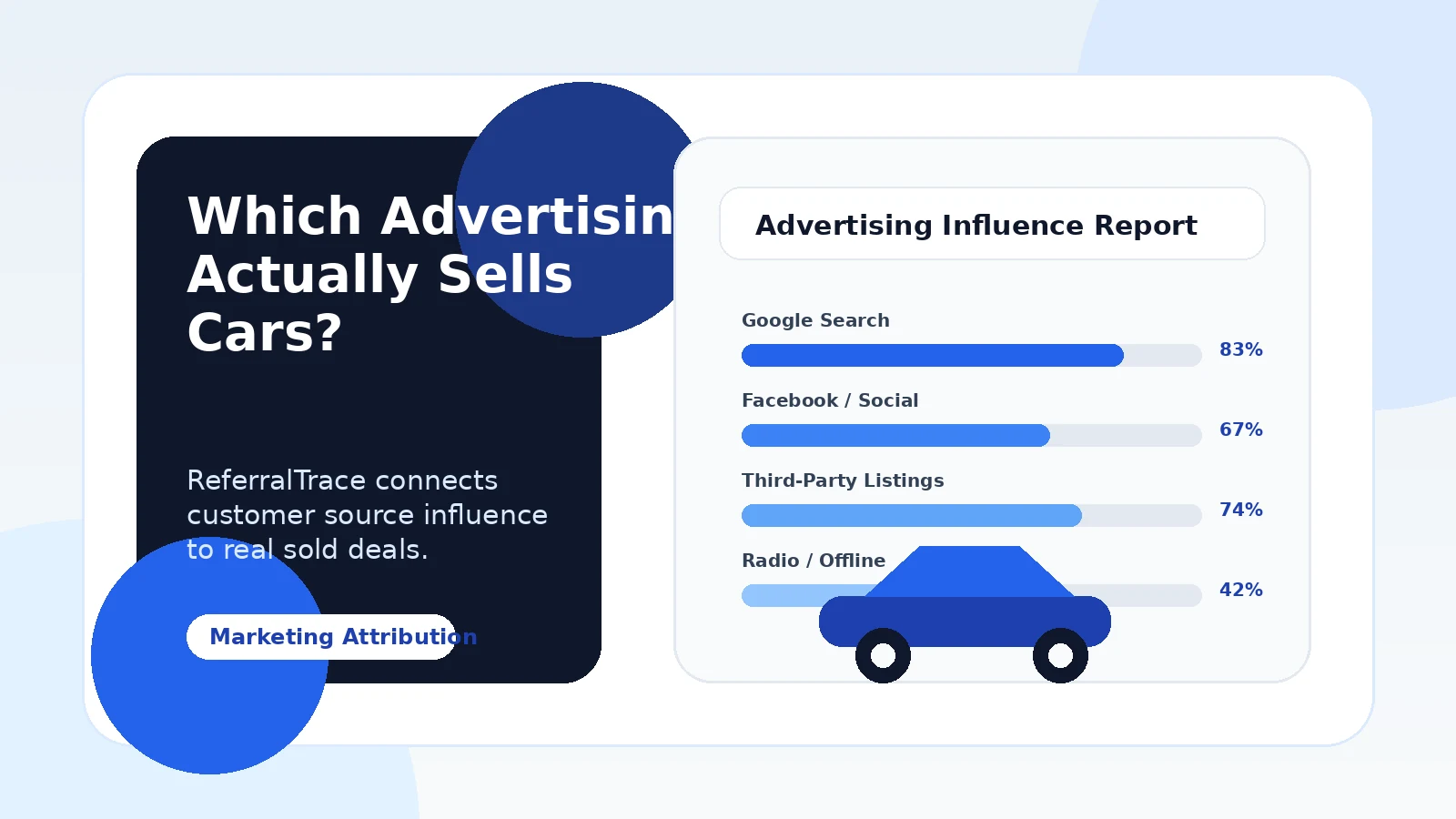
So which source should receive credit for the sale? That is where dealership marketing attribution software becomes important. Instead of relying only on digital reports, dealerships can collect customer-reported influence data at the point of sale and connect that information directly to actual vehicle sales.
Traffic Is Not the Same as Sales Impact
A campaign can generate strong website activity and still produce very few sold customers. Another campaign may look smaller in a traffic report but influence serious buyers who are ready to purchase. Without attribution, both situations can be misunderstood.
Traffic Is Not Always Profit
A campaign can generate a lot of website visits but still produce very few sold customers.
Influence Can Be Hidden
Some channels may quietly influence buyers even when they do not get the last click.
Why Dealership Reporting Often Misses the Real Answer
Many dealerships discover surprising results when they begin tracking attribution. Marketing channels that generate large amounts of traffic may contribute very little to actual sales. At the same time, other channels that look less impressive on the surface may be influencing serious buyers who are ready to purchase.
Without proper attribution, advertising decisions are often based on incomplete information. Dealers may continue investing in campaigns that look successful on paper while overlooking the sources that are truly helping bring customers into the showroom.
A complete automotive marketing attribution strategy helps dealers understand how customers move through the buying process. Instead of treating every source as separate, attribution shows how multiple advertising channels work together before the final sale happens.
Lead Volume Does Not Always Equal ROI
Another important part is measuring profitability instead of only lead volume. Generating leads is useful, but dealerships ultimately need to know which marketing investments produce vehicle sales, front-end gross profit, and back-end gross profit.
That is why many dealer groups are now paying closer attention to dealership ROI tracking. When advertising activity is connected to real sold deals, managers get a clearer picture of where the money should go next month.
Customer Source Tracking Gives the Store Better Visibility
Customer source information is also critical. A structured dealer source tracking system gives the store better visibility into where buyers first discovered the dealership and what helped influence the final decision.
As advertising costs continue to rise, dealerships can no longer afford to rely on guesswork. The stores that make better marketing decisions are usually the ones that understand the difference between activity and real sales impact.
Knowing which advertising actually sells vehicles is no longer just a marketing advantage. It is becoming a necessary part of modern dealership operations, smarter budgeting, and long-term profitability.
Stop guessing. Start tracking.
ReferralTrace helps dealerships connect customer source data, advertising influence, and sold deal results so managers can make better marketing decisions.
Request More Information