Every year, dealerships make advertising decisions that cost them thousands of dollars in lost opportunity. The strange part is that many of these decisions are made with good intentions. Dealer principals and general managers review reports, compare vendors, study lead counts, and try to cut waste from the budget.
But there is one major problem. The report they are looking at may not be showing the full truth.
The vendor may not have failed. The dealership may simply be measuring the wrong thing.
The Common Dealership Mistake
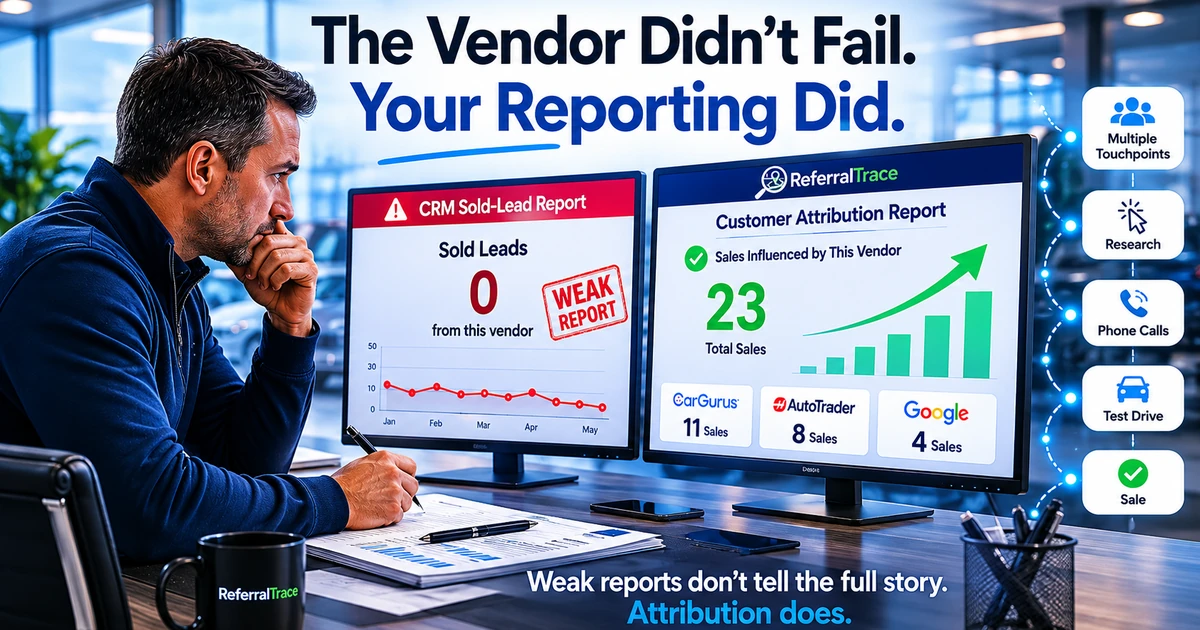
A dealership reviews its CRM and sees that a third-party marketplace, such as AutoTrader or CarGurus, generated leads but shows very few sold customers. Sometimes the sold count may even show zero.
From the surface, the decision looks simple. If the vendor is not selling cars, why keep paying for it? So the vendor gets canceled.
Then something happens a few months later. Website activity softens. Phone calls slow down. Showroom traffic feels lighter. Sales may dip, but nobody can clearly explain why. The vendor that looked weak in the CRM may have been influencing real buyers the entire time.
Lead Source Is Not the Same as Sales Influence
Most CRMs are good at tracking lead sources. That matters, but it does not always explain how the customer actually made the buying decision.
A customer may first find a vehicle on CarGurus, visit the dealership website later, search the dealership name on Google, browse inventory again, and then walk into the showroom without submitting a lead from the original marketplace.
In the CRM, that sale may receive credit as a website lead, phone call, showroom visit, or Google source. But the customer may tell you that CarGurus is where they first found the vehicle.
That is the gap dealership marketing attribution software is designed to close.
Why Sold Lead Reports Can Be Misleading
A sold lead report can be useful, but it can also create false confidence. It may show which source captured the lead, but not necessarily which source influenced the buyer.
That difference matters. Dealership advertising is not always a straight line. Shoppers move between listing sites, dealership websites, search engines, social media, phone calls, and showroom visits. A report that only credits the final touch can make strong advertising partners look weak.
This is how a dealership can cancel a vendor that actually helped produce five or six sales, simply because the CRM sold-lead count showed zero.
The Better Question to Ask Customers
Instead of only asking, "Where did the lead come from?" dealerships should also ask, "What advertising helped influence this customer to buy?"
That question changes the conversation. It gives the dealership visibility into the real customer journey. It also helps management understand which advertising sources are creating awareness, building trust, and bringing buyers closer to the sale.
A stronger automotive marketing attribution process helps dealerships see beyond the first form submission or last CRM source. It connects advertising influence to actual sales activity.
Protecting the Advertising That Actually Works
Cutting waste is important. No dealership wants to spend money on advertising that does not perform. But the danger comes when a dealership cuts based on incomplete data.
If a vendor is truly not helping, it should be reviewed. But if that vendor is quietly influencing buyers who later arrive through another path, canceling it can hurt the dealership without anyone immediately realizing why.
This is why dealer source tracking and dealership ROI tracking need to go beyond simple lead counts. The goal is not just to count leads. The goal is to understand which advertising helps create sold customers.
Better Data Leads to Better Decisions
Dealer principals and general managers do not need more noise. They need cleaner visibility. They need to know which advertising channels are creating attention, which ones are influencing buyers, and which ones are connected to real sales and profit.
When dealerships rely only on CRM sold-lead reports, they may accidentally punish advertising partners that are doing their job. When they add real customer attribution to the process, they can make smarter decisions and protect the vendors that are quietly helping them sell vehicles.
The lesson is simple. Before canceling an advertising vendor, make sure the dealership is not confusing poor reporting with poor performance.
See the advertising influence your CRM may be missing.
ReferralTrace helps dealerships capture customer-reported source influence and connect marketing decisions to real vehicle sales.
Contact ReferralTrace